
A Guide to Trancoso, Brazil
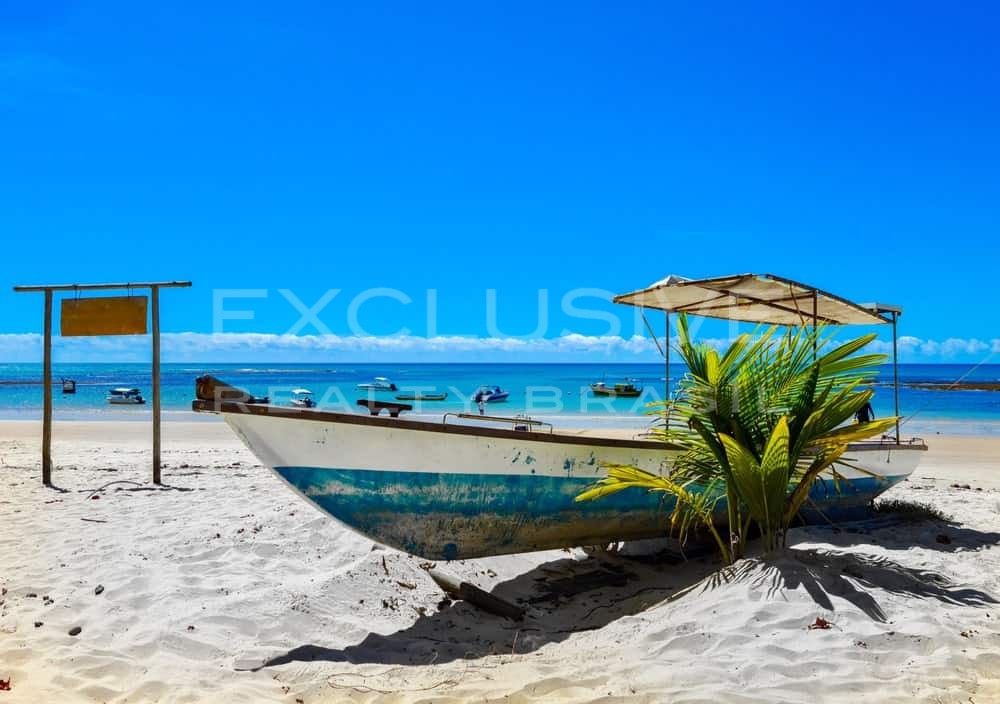
Trancoso is a small village on the coast of South Bahia, in the municipality of Porto Seguro, that has become one of Brazil’s most sought-after places to visit and to own a home. This guide covers what you need to know before your first visit: a little history, how to get there, when to come, the beaches, food and what daily life is like.
A short history
Trancoso was founded by Jesuit missionaries in the 1580s as a settlement for the indigenous population, under the name São João Batista dos Índios. The village was laid out around a long, open green — the Quadrado — with the white church of São João Batista at the end facing the sea.
For most of the following four centuries Trancoso was a remote fishing and farming community, reached by tracks and by the beach. Visitors began to arrive in the 1970s, many of them travellers and artists drawn by the isolation and the landscape. Electricity, paved access and the airport at Porto Seguro came later, and with them a gradual shift towards boutique hotels, restaurants and holiday homes.
Today the Quadrado and its colourful houses are protected as national heritage by IPHAN, Brazil’s heritage institute, which is one reason the centre has kept its scale and character. The surrounding coast is part of the Discovery Coast, where the Portuguese first landed in 1500, and much of the land around Trancoso is still covered by Atlantic Forest.
Getting there
The nearest commercial airport is Porto Seguro, with direct flights from São Paulo, Rio de Janeiro, Belo Horizonte and other Brazilian cities. From the airport, the usual route is a short ferry crossing of the Buranhém river to Arraial d’Ajuda and then the road south to Trancoso; allow about an hour, more in high season.
Private aircraft and helicopters can use the Terravista airport, a few minutes north of the village. A car is useful for exploring the wider coast, as many beaches and properties are reached by unpaved roads.
When to visit
Trancoso is warm all year. Average maximum temperatures range from about 29°C in summer (December to March) to about 24–25°C in July and August, with nights rarely below 19°C.
- High season runs from mid-December to Carnival. New Year (Réveillon) is the busiest and most expensive period, with parties, concerts and the village at full capacity.
- Rain is spread through the year but tends to be heaviest in November–December and around March and April. August and September are usually the driest months.
- Quieter months — roughly May to early December, outside holidays — offer lower prices, empty beaches and a more local rhythm. They are also a good time to view properties without the high-season rush.
The Quadrado
Everything in Trancoso starts at the Quadrado. By day it is a calm green with children playing football and people walking to the church viewpoint over the sea. In the evening the restaurants and boutiques in the old houses light up and the square becomes the social centre of the village. Religious and local festivals are held here throughout the year, including the Festa de São Brás in early February.
The beaches
Trancoso’s beaches are long, wide and backed by cliffs, forest and coconut palms, with reefs that form natural pools at low tide. From north to south, the main ones are:
- Taípe – beneath coloured cliffs below Terravista, known for its New Year party.
- Rio da Barra – a quiet stretch of beach and lagoon between forest, mangrove and the sea.
- Nativos – the closest beach to the village, with beach bars and restaurants.
- Coqueiros – just south of the centre, calm water and reefs.
- Rio Verde and Itapororoca – further south, with forest running down to the sand; Itapororoca is public, although surrounded by private estates.
- Itaquena – a protected stretch reached on foot, popular with surfers.
Further south, Praia do Espelho (about 35 minutes by road) and the village of Caraíva are classic day trips. See our guide to the beaches of Trancoso for more detail.
Food and drink
Bahian cooking is the base: moqueca (fish or seafood stewed with coconut milk, dendê oil and coriander), acarajé, bobó de camarão and fresh fish grilled on the beach. Alongside it, Trancoso has a strong restaurant scene, from simple places serving a set lunch to chef-led restaurants around the Quadrado and in Terravista. Our restaurant guide lists some favourites.
Things to do
- Swim and snorkel in the reef pools at low tide at Coqueiros, Itapororoca and Espelho.
- Play golf at Terravista, a clifftop course with views over the ocean.
- Walk or cycle the beaches between Trancoso and Rio da Barra.
- Take a boat or buggy trip to Caraíva and Corumbau.
- Join a festival: Réveillon, Carnival, the Festa de São Brás or the Música em Trancoso classical music festival.
- Spend an evening on the Quadrado.
Living in Trancoso
Many visitors come back to buy. Trancoso offers several very different ways of living: a house in the historic centre, a home in a quiet neighbourhood such as João Vieira, a villa in a gated community such as Altos de Trancoso or Terravista, or a large estate in the forest towards Itapororoca. Our guides to Trancoso’s neighbourhoods and the cost of living in Trancoso are a good next step.
Exclusive Realty Brasil has been based in Trancoso since 2006. If you are planning a visit or thinking about buying, get in touch — we are happy to share local advice.
Thinking of buying in South Bahia?
Tell us what you are looking for — including off-market properties we do not publish online.